Interior

format3d
05/06/2024
5 Uses of 3D Rendering for Architects

Professional 3D visualization plays a significant role in various aspects of architecture, aiding architects in presenting their projects, enhancing their skills, and accelerating career growth. However, achieving these goals is not always straightforward, as architecture professionals face numerous challenges in their work.

One of the challenges architects encounter is effectively conveying design concepts to individuals without architectural training. It can be difficult to ensure that the intended message is understood correctly. Additionally, architects strive to refine complex designs to perfection, communicate ideas clearly to construction teams, incorporate client feedback effectively, and stay updated with new technologies.

To address these challenges, many architecture specialists have discovered the benefits of professional 3D architectural visualization. By utilizing 3D rendering, architects can overcome communication barriers and provide visual representations that are easily comprehensible to clients and stakeholders. CG rendering helps in conveying design intent accurately and ensuring that all parties involved have a clear understanding of the project.

Moreover, 3D visualization allows architects to refine their skills and explore new creative possibilities. It provides a platform for experimentation and iterative design, enabling architects to visualize and evaluate different concepts, materials, and lighting conditions before actual construction begins. This process empowers architects to make informed decisions, refine their designs, and deliver exceptional results.

In summary, 3D architectural visualization is a valuable tool that enables architects to overcome communication challenges, refine their skills, and elevate their professional growth. It enhances the presentation of architectural projects, facilitates effective collaboration, and empowers architects to reach new heights of excellence in their field.

#1. Professional CGI Helps to Visualize Design Ideas Better

In the past, architects relied on traditional methods such as sketches and drawings to visualize their concepts and refine their ideas. However, these traditional visuals had limitations in accurately representing the architect’s imagination and could lead to differences between the envisioned design and the final result.

To bridge this gap and achieve a more accurate representation, architecture professionals now utilize 3D visualization. Skilled 3D artists can take drawings and sketches as a starting point and transform them into photorealistic digital renderings. This enables architects to see a lifelike representation of their design in the digital realm before any physical construction takes place.

By leveraging CGI, architects gain a valuable tool that allows them to assess and understand how their project will look and feel. They can easily identify areas that need adjustment or improvement, enabling them to refine the design to align with their vision. This level of visualization provides architects with greater control and ensures that the final result matches their expectations.

Overall, 3D visualization has revolutionized the way architects conceptualize and refine their designs. It offers a more accurate and realistic representation of their ideas, empowering architects to make informed decisions and create exceptional architectural outcomes.

#2. CG Visualization Allows for Detecting and Correcting Design Flaws

In architectural projects, mistakes in calculations can lead to issues and delays during construction or even after the completion of the building. These mistakes can disrupt the workflow, cause additional costs, and impact the overall quality of the project. However, 3D visualization offers a solution to mitigate these risks and prevent failures.

By creating a photorealistic CGI representation of the design concept, architects can identify potential mistakes and inconsistencies in advance. The accurate depiction of materials, architectural elements, and dimensions in the 3D rendering allows the author to visually inspect the project and catch any errors in calculations or design. This early detection helps in rectifying the issues before construction begins, saving time and resources.

With 3D visualization, architects can examine the building from different angles, explore the spatial relationships, and assess the functionality of the design. This level of detail and accuracy enables them to make necessary adjustments, refine the calculations, and ensure that the final construction aligns with the intended design.

By using 3D visualization as a preventive tool, architects can minimize the likelihood of mistakes, improve the overall accuracy of the project, and enhance the client’s satisfaction. It allows for better communication and collaboration between all stakeholders, reducing the chances of costly errors and rework. Ultimately, the use of 3D in architecture helps to streamline the construction process and deliver successful projects with fewer unexpected setbacks.

#3. High-Quality 3D Rendering Sets the Stage for Getting Better Feedback

Communicating architectural designs effectively with clients who have no architectural background can be challenging. Misunderstandings and dissatisfaction can arise when clients struggle to interpret traditional drawings and visualizations. However, the use of CGI in architecture provides a solution to overcome these difficulties and facilitates productive discussions.

By utilizing 3D rendering, architects can present their designs in a visually realistic and immersive manner. This allows clients to easily comprehend the proposed concepts and envision the final result. Clients can visually explore the 3D renderings, navigate through virtual spaces, and gain a clear understanding of the design elements and aesthetics.

The interactive nature of CGI enables effective communication between architects and clients. Clients can provide feedback and express their preferences directly based on what they see in the 3D renders. They can point out specific details they would like to be modified, such as colors, materials, or architectural features. This real-time feedback process ensures that the client’s expectations are understood and incorporated into the design.

Moreover, CGI allows for quick iterations and adjustments. Architects can easily update the 3D renderings to reflect the desired changes discussed with the client. This collaborative approach streamlines the decision-making process, eliminates misunderstandings, and ensures that the final design aligns with the client’s vision.
By using CGI as a communication tool, architects can bridge the gap between their expertise and the client’s understanding. It facilitates effective dialogue, fosters trust, and enhances the overall client experience. Ultimately, the use of 3D visualization in architecture helps to establish a common language, minimize misinterpretations, and create a collaborative environment where the client’s requirements are accurately translated into the final design.

#4. CGI Is Used to Explain Concepts to Construction Workers

You’re absolutely right. Effective communication between the architect and the construction team is crucial for the successful realization of a design. While construction workers are trained to interpret technical drawings, having a photorealistic 3D rendering as a visual reference enhances their understanding and minimizes the potential for conflicts or misunderstandings.

By using 3D visualization in architecture, architects can provide the construction team with a comprehensive and detailed representation of the intended design. The visual clarity and realism of the renderings help the construction team visualize the project’s final outcome, including spatial relationships, materials, textures, and intricate design details. This allows them to grasp the architect’s vision more accurately and efficiently.

With 3D renderings, construction teams can easily interpret and follow the design intent, ensuring that every element is constructed as envisioned. They can accurately assess the scale, proportions, and construction methods, which leads to smoother coordination and execution of the project.

The use of CGI in architecture not only facilitates effective communication but also enables proactive problem-solving. Construction teams can identify potential challenges or conflicts in advance by examining the 3D renderings. This early detection of issues allows for timely adjustments and avoids costly rework or delays during the construction process.

Ultimately, 3D rendering serves as a medium that aligns the architect’s creative vision with the construction team’s technical expertise. It enhances collaboration, fosters a shared understanding, and enables the construction team to bring the design to life accurately and efficiently.

#5. CG Visualization Saves Time for Creative Work and Talent Development

Architects face the challenge of balancing routine tasks with creative endeavors, often finding themselves overwhelmed and lacking time for innovation. Tasks such as preparing visual materials for project pitching can be time-consuming, requiring hours of sketching or building physical models. This drains their energy and leaves little room for creativity or skill development.

Additionally, the project approval phase can bring further challenges, with clients misunderstanding the concept or having objections to cost estimates. Endless discussions ensue, leading to delays in project approval and initiation. To address these issues, architects turn to 3D visualization.

3D visualization, or CGI, offers a solution that saves architects time and enhances their effectiveness. Instead of spending hours sketching or constructing physical models, architects can simply contact a 3D visualization studio and provide a project brief. Skilled 3D artists use the blueprints and material list to create stunning photorealistic renders, eliminating the need for manual labor-intensive preparations.

CGI also revolutionizes project presentations by providing prospects with a clear visual representation of the future building. This significantly shortens discussions on design and pricing, leading to faster decision-making. Architects can save valuable time, which can be dedicated to mastering new skills and nurturing their creative talents.

The benefits of 3D visualization extend beyond project presentations. It helps identify and rectify design mistakes in the early stages, facilitates better communication with construction workers by illustrating technical drawings, and ultimately alleviates architects from routine tasks, allowing them to focus on creative work and professional growth.

By embracing professional 3D rendering services, architects can optimize their workflow and enhance their success in the architecture industry. Photorealistic 3D visualization empowers architects to be more productive, receive better feedback from clients, and improve their overall efficiency. Embrace the power of CGI and unlock your full potential as an architect.

Read More
format3d
09/06/2023
​Architectural visualization in transition: The Influence of Apple Vision Pro and Meta Quest Pro / Quest 3

The world of architectural design and 3D visualization is about to take a giant leap forward, thanks to the recent unveiling of two groundbreaking products: Apple’s Vision Pro and Meta’s Quest Pro / Quest 3. These cutting-edge devices will revolutionize the way architects, designers and their clients interact with, perceive and visualize architectural projects, taking 3D modeling and visualization to new heights. In this blog post, we explore the potential applications of these cutting-edge technologies in architectural design and the exciting possibility of combining augmented reality (AR) and virtual reality (VR) to create truly immersive experiences.

Apple Vision Pro: A New Era in Architectural Visualization

Apple’s Vision Pro, announced just a few days ago, has generated great excitement in the tech industry and will have far-reaching implications, including for the field of architectural design and visualization. With its groundbreaking mixed reality capabilities, the Vision Pro combines a mix of VR and AR in one headset, providing architects with a powerful tool to showcase their work.

One of the standout features of the Vision Pro is its dual 4K resolution per eye. This feature provides an unprecedented level of detail and allows architects to present their designs with high accuracy and precision, giving their clients a realistic impression of their project. This can be especially useful in the early stages of design, when clients can only envision the final product from 2D drawings.

In addition, Vision Pro’s unique design features, such as the absence of controllers and the use of hand tracking, eye movements and voice input, make for an intuitive and interactive experience. Architects can guide clients through virtual tours of their designs, interacting with the virtual environment in a natural and intuitive way. Clients can “touch” and “move” objects, providing immediate feedback that can be invaluable to the design process.

The Vision Pro’s external battery pack, a design decision that may seem unconventional, actually opens up opportunities for extended use, allowing for longer, uninterrupted visualization sessions. This can prove essential during collaborative design meetings or comprehensive project reviews.

The Vision Pro is a mixed reality headset that combines elements of AR and VR to provide immersive experiences that take 3D visualization to a new level. The headset runs on VisionOS and features dual 4K resolution per eye. It delivers incredibly detailed and realistic images that are critical for 3D modeling and architectural visualization.

Interestingly, the Apple headset uses two chipsets, an M2 and a new R1, to drive the regular software and XR functions, respectively. This powerful hardware enables smooth rendering of complex 3D models and renderings and could revolutionize the way architects and designers present and interact with their work.

Unlike traditional VR headsets, the Vision Pro doesn’t come with controllers. Instead, it uses hand tracking and voice input to control its software, providing a more intuitive and immersive user experience. Imagine being able to manipulate a 3D building model with your hands or control your virtual environment with your voice. The unique capabilities of Vision Pro offer an exciting glimpse into the future of architectural work and 3D visualization.

Meta Quest Pro / Quest 3: Redefining Virtual Reality in Architecture

Just weeks before Apple announced the Vision Pro, Meta unveiled its latest VR headset, the Quest 3. With a 40% slimmer design and a powerful new Snapdragon chipset, the Quest 3 offers a comfortable, high-performance VR experience. Its potential applications in architectural design and visualization are equally exciting.

The Quest 3’s enhanced graphics performance can render architectural models in high resolution, providing a higher level of detail and realism. The device also has an enhanced high-fidelity color passthrough feature that allows users to see the real world around them in full color through the headset. This is an exciting development for architects as it offers the ability to blend virtual designs with the real world, creating a unique AR experience that can help clients understand how a new building or space will interact with its surroundings.

The Fusion of AR and VR: The Future of Architectural Visualization

The introduction of devices such as the Vision Pro and Quest Pro / Quest 3 represents a significant step towards the convergence of AR and VR. This convergence represents an exciting new frontier in architectural visualization.

The use of AR can provide contextual information and overlays to real views, while VR immerses users in a fully digital representation of a space.

Read More
format3d
01/06/2023
Will AI Replace 3D Artists or Architects Any Time Soon?

The question of whether Artificial Intelligence (AI) will replace 3D artists or architects is currently a focal point of debate amongst the creative community. AI’s surge in popularity has drawn reactions across the spectrum. Some artists enthusiastically adopt this emerging technology, while others staunchly resist it, mainly due to copyright infringement concerns regarding the unauthorized training of AI on copyrighted artworks. A cautiously optimistic group foresees AI as a powerful ally in the creative process, offering artists greater expressive freedom and alleviating tedious tasks – if the copyright issue can be resolved.

However, there’s a pressing concern amongst many: instead of just automating monotonous tasks and freeing up more time for creative pursuits, will AI eventually replace artists entirely? This question has significant implications for both 3D visualization experts and their clientele.

As a 3D visualization studio, we constantly monitor advancements in technology that could potentially influence our industry. And AI undoubtedly fits that bill. But will it supplant 3D artists? That’s the intriguing question we aim to explore in this article. So, will AI render 3D artists or architects obsolete in the foreseeable future? Let’s dig deeper to uncover the truth!

1. How does AI work?

Artificial intelligence operates as a neural network designed to seek out and identify patterns in the data it receives. This data is analyzed and transformed into something new by the software. While there are various types of AI tools available, our focus in this context is on visual-based ones that are currently revolutionizing the creative landscape.

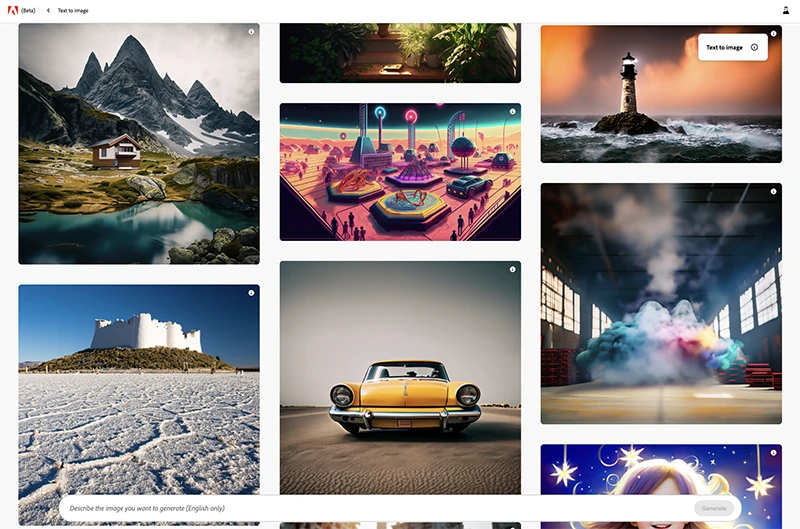
Among the most renowned AI software that works with images are Midjourney, DALL-E 2, Stable Diffusion, Craiyon, Hotpot, Crypko AI, GLIDE, Latent Diffusion, and Artbreeder, each offering unique features. For instance, NightCafe facilitates video creation, Deep Dream Generator provides image editing capabilities, and StarryAI generates NFTs.

So, how does this AI technology function? Let’s examine the operations of Midjourney, one of the most popular visual-based AI software. Upon receiving text and/or visual input, it generates an image or sequence of images according to the specified request. It primarily utilizes online imagery, which is a contentious point among creatives who are against this technology. However, there’s nothing preventing 3D artists from directing AI to use their own artworks for reference.

Now let’s look at a real example. One of our artists took two pictures from the Format 3D portfolio.

He gave them as references for Midjourney. In less than a minute, he got this result.

Similarly, when two more of our renders were combined in Midjourney, it yielded this outcome.

The result

For another example, the artist used a pair of our 3D renders as a reference for AI, but this time, textual input was also included.

Specifically, Midjourney was instructed to incorporate evening lighting into the resulting image. And here it is.

What do you think? It’s quite remarkable, isn’t it? In addition to the above, another AI tool that has been making waves in the creative sector is ChatGPT. This tool operates differently from the previously mentioned ones as it’s text-based. However, it certainly holds its own value for architects, 3D artists, and other visual creatives. We will delve into its potential applications and benefits later in this article. Stay tuned!

2. How can AI be useful for a 3D artist?

AI, first and foremost, serves as a practical tool during the concept development stage with clients, where it complements rather than replaces 3D artists. There’s no more need for artists to invest considerable time modeling scenes and rendering images that might ultimately be rejected by the client. Now, artists simply need to provide the AI with the client’s visual references or text descriptions of the desired outcome. The AI can promptly visualize the concept, with as many iterations as necessary until it generates a concept that the client approves. Only then will they need to transition to working in 3ds Max to replace AI-produced images with high-quality 3D renders.

AI is also beneficial as a source of references for artists who wish to enrich their portfolio with personal works. It simplifies the process of finding the optimal angles, shapes, textures, materials, and colors, thereby significantly accelerating the workflow. In such tasks, AI cannot replace 3D artists as human intervention is critical for selecting suitable references and using them innovatively. Here, AI is more likely to substitute for moodboards.

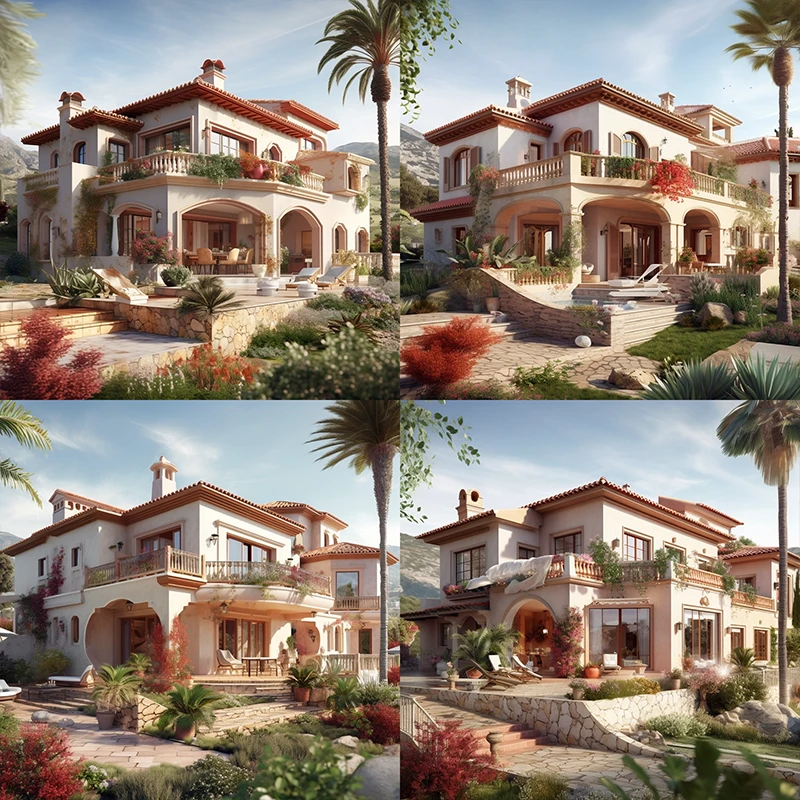
To demonstrate, let’s consider how one of our artists used Midjourney to create a portfolio piece. The artist inputted the following keywords: “Mediterranean home summer seaside high-quality render”. Based on this, the AI generated four options.

The artist chose one image (the upper right one) from which the AI created four variations.

After a few more iterations, the artist used the resulting image as a foundation to complete the concept, model and texture it in 3ds Max, and render the high-quality image seen below as a valuable addition to his portfolio.

But how does text-based AI like ChatGPT fit into this? It presents another avenue to streamline the architectural visualization workflow. At Format 3D, we now write down every client’s comment, convert them into text, and input them into ChatGPT.

The AI subsequently generates a to-do list from this input, saving significant time and effort in crafting a detailed technical assignment. This enables us to deliver projects to our clients more rapidly.

3. How can AI be useful for architects?

Will AI supersede architectural experts? It seems improbable. However, it is certain to bring about significant changes in the industry, with the initial stages of the project – sketching and ideation – likely to be the first to evolve. As US architect Andrew Kudless notes, “Like architectural sketches, AI imagery is often colorful and dreamlike, but not necessarily actionable as a detailed plan.”

In essence, AI will enable architects to revolutionize their interactions with clients by presenting an array of vivid, enticing images during the early phases of design brainstorming. Additionally, AI will shoulder the burden of mundane tasks. These could encompass repetitive tasks like reproducing simple designs in various environments. Hence, while AI may not replace architects, it certainly promises to enhance their capabilities and streamline their workflows.

4. What can humans do better than AI?

While some argue that AI training on images parallels an artist using references, the analogy is not entirely accurate. While human artists refine their skills, seek a distinctive style, and crucially, possess the ability to conceptualize a truly novel concept from scratch, AI lacks this capacity for innovation. AI essentially collates data; it doesn’t create anything uniquely innovative. This explains why it’s not uncommon to encounter distorted artists’ watermarks on some AI-produced outputs. Therefore, AI’s function can be likened more to crafting a sophisticated collage.

What sets human artists and architects apart from AI is their innate creativity, intent, and imagination. Inspiration and insight are not easily replaceable or replicable by a machine. AI lacks the ability to think like a human, so to yield even remotely useful results, it necessitates a human counterpart – someone to select and fine-tune the input. Therefore, while AI may aid and enhance human creativity, it doesn’t have the capacity to fully substitute for it.

5. What to expect from AI in the future?

Will AI usurp the roles of 3D artists or architects in the near future? The unequivocal answer is no. However, it is anticipated that AI will transform many facets of these professions. Beyond generating compelling concept sketches early in the process, AI could also be employed to evaluate and optimize plans and blueprints, as well as prioritize project tasks. Furthermore, it can assist in risk assessment, as it is less likely to overlook any design errors.

Collectively with virtual reality for architects, AI technologies are poised to elevate workflow and presentations in the AEC industry to unprecedented heights. A VR tour of an AI-powered yet-to-be-built house? Absolutely feasible! Perhaps AI will eventually realize one of humanity’s most desired dreams: robots handling the mundane tasks while humans get to indulge in artistic and innovative pursuits.

While some may harbor concerns about the question “will AI replace 3D artists or architects,” the majority of the creative community – particularly those with first-hand experience working with AI – concur that the technology will be a transformative force for the better within the industry. The consensus is that it is highly improbable that AI will supplant 3D artists, architects, and designers. Although AI does expedite certain processes, it invariably requires a human touch to produce something genuinely intriguing or useful.

In the grand scheme of things, AI is akin to photography, which rattled the art world over a century ago. At Format 3D, it is certain that AI will not replace our seasoned professionals. However, we are already utilizing it to facilitate our 3D artists’ work and to deliver our clients more awe-inspiring results at a quicker pace than ever before.

Read More
format3d
14/02/2023
3D Visualization in Furniture Manufacturing Industry

The furniture manufacturing industry is constantly evolving, with new technologies and advancements making it easier to create high-quality, functional pieces. One of the most exciting developments in recent years has been the rise of 3D visualization in the design and manufacturing process. Here are three ways that 3D visualization is transforming the furniture industry:

1. Improved Design Accuracy

With 3D visualization, furniture designers can create detailed and accurate digital prototypes of their designs. This allows them to see exactly how the pieces will look and function, allowing them to make changes and fine-tune their designs before they start the manufacturing process. This can help to reduce the risk of errors, save time and money, and ensure that the final product meets the designer’s vision and the customer’s needs.

2. Enhanced Customer Experience

3D visualization also allows furniture retailers to provide their customers with a more immersive and interactive shopping experience. Customers can view digital prototypes of furniture pieces, get a sense of how they will look and fit in their homes, and make informed purchasing decisions. This can help to increase customer satisfaction and reduce the risk of returns.

3. Streamlined Manufacturing Process

In addition to its benefits in the design phase, 3D visualization can also streamline the manufacturing process. Furniture manufacturers can use digital prototypes to create detailed and accurate cutting and assembly plans, reducing the risk of mistakes and ensuring a smooth and efficient production process. Additionally, 3D visualization can help to minimize material waste, which can result in cost savings and a more environmentally sustainable manufacturing process.

Conclusion

3D visualization is changing the way that furniture is designed, manufactured, and sold. With its ability to improve accuracy, enhance the customer experience, and streamline the manufacturing process, it’s no wonder that more and more furniture companies are turning to 3D visualization as a key tool in their design and production processes. Whether you’re a designer, manufacturer, or retailer, incorporating 3D visualization into your business can help you to create better products, build stronger relationships with your customers, and stay ahead of the curve in an ever-evolving industry.

Read More
format3d
17/01/2022
3D format offers superior 3D interior visualization

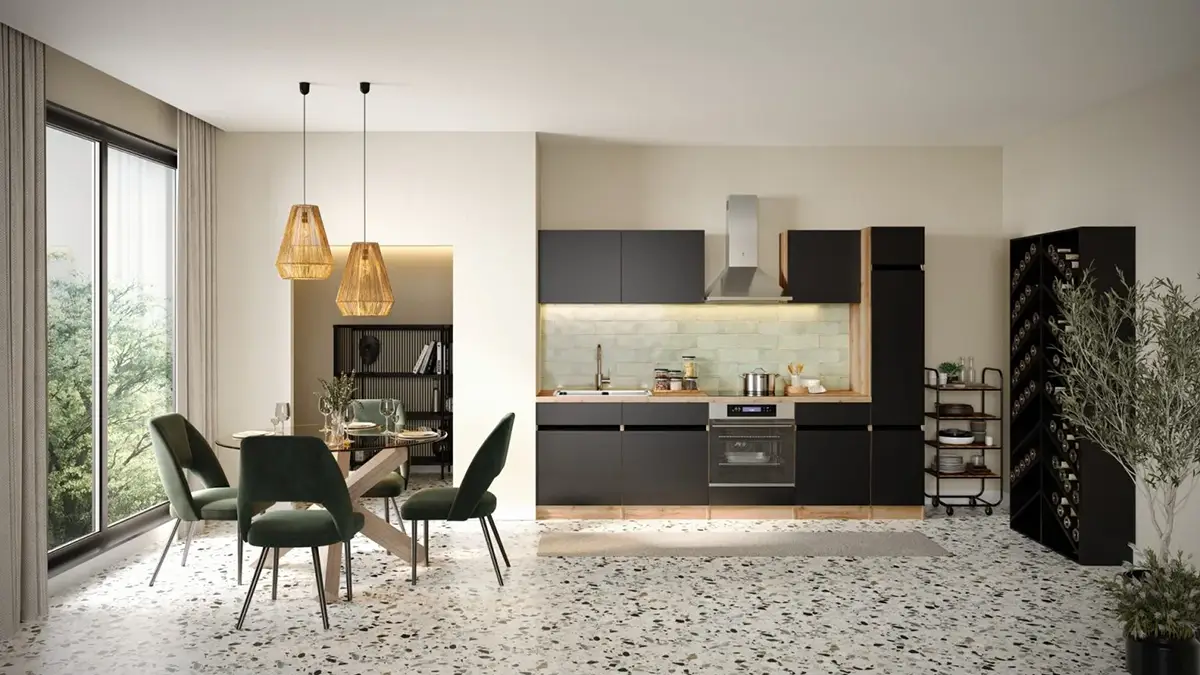
Presenting interiors that were not completed in the past was not an easy task until the advancement of 3D technology, which brought out 3D visualization software to provide people with more alternative experiences. 3D interior visualization has emerged as an innovative practical tool for 3D visualization companies that have so realistically created amazing interior designs. People portray interior visualization as a real reflection of architecture that has not yet been built.

As the 3D visualization market has gradually entered a period of saturation, finding good 3D visualization companies is not an easy task. The 3D format is welcome and is known as one of the best 3D architectural visualization companies dedicated to providing unmatched expertise and design in photorealistic visualization. Every skilled 3D designer in our company feels valued, measured and accepted because we promote an inclusive atmosphere in which differences are accepted. Our mission is to empower professionals to show a touching interpretation of interior design in the right way to satisfy customers. Whether you need a 3D solution for your commercial or residential project, our designers will help you, meet your expectations as well as your clients’ best visual design.

With the help of our 3D interior visualization you can:

  • Perform more designs and help expand your sales scope. Advanced architectural design and innovative solutions are presented while aligning each improvement method.
  • Visualize spectacular interior designs with a complete integration of colors, lighting, textures, materials, etc., down to the smallest detail. Clients can experiment with virtual architecture in advance with an impressive experience.
  • Improve your marketing strategy with professional 3D images and artistic sense.
  • Help clients reduce the cost of leaving a project to professionals. Every experienced 3D designer from Format 3D is expert in all types of interior design and can ensure the perfect completion of your projects without any delays.

If you need professional help to visualize your interior,Format 3D will be your best choice. The 3D format offers the most elaborate design with 3D interior visualization for realization of your visual vision. Send us a message at info@format3dstudio.com to find out how our 3D visualization solution suits your unique needs.

Read More
format3d
17/01/2022
How to manage the rendering process and create impressive 3D visualizations?

3D rendering is fast becoming popular in the design industry, and for good reason. It becomes the first choice for architects, designers and real estate developers when presenting a future project or submitting a renovation for approval. Computer software generating a three-dimensional image is the best way to bring ideas to life. There are many reasons why you should use 3D rendering, but it is a wise choice to have a basic understanding of what 3D rendering is and how we manage the rendering process before you actually use it. Today, this article will present the key factors of 3D rendering.

3D rendering, as one of the fastest growing technologies, has been at the forefront of design. The term 3D rendering is the process of creating a still image based on three-dimensional data stored in a computer. Through the computer we can add perfect shade, lighting, vegetation, texture as well as furniture that is regularly used or made to order. If there are errors or dissatisfaction with the design, we can easily adjust and replace the items and display them in an updated draft. Furthermore, 3D rendering is commonly used, such as magazines, billboards, digital media or TV, you can basically see them on a daily basis.

In general, the production of 3D rendering includes three parts: modeling, rendering and post-work, and final delivery.

Production information

What information the client provided is important for project evaluation. If you can give a complete 3D model with all the details and material inside, it would be a great help for 3D experts to make a model. But if you can’t provide a model, CAD, elevations, floor plan or even a hand drawing will be acceptable. In addition to the model, choosing the right angle for your project is crucial. For example, an aerial view that grasps a large image of a building shows the layout, surrounding context, or emphasis of the design to the greatest extent possible. Remember to mark the angle on the model. If you do not have ideal angles, Format 3D will recommend a few angles to check.

When it comes to interior design, some clients may require custom-made furniture or accessories. In this case, customers must submit high-resolution reference images and list all the furniture that should have been made to measure. A professional 3D company like Format 3D can easily handle a task like this. Regardless of the type of project, providing clear and understandable information is the basis for guaranteeing a simpler start.

The rendering process

Once all the files have been sorted, the modeling draft will be sent for review. As the name suggests, this is an earlier stage of production. The draft is a space without any material or texture, which only serves to check the angle and model, identify places or angles of the sun. If it is an interior, then you will get a draft in gray tones that shows the room with layout and furniture. Unlike the exterior display, it is a colorless image to check that the dimensions and position of the windows, doors and ceiling are correct. It usually takes 2-3 rounds to confirm the angle and model.

After confirming the model, it goes ahead to rendering and post-work. This phase involves adding texture as well as placing sunlight and shadows coming from artificial sources into the building. Lighting is key to rendering. Different moods and lighting bring different feelings. Some might choose soft lighting to enhance warmth and comfort, while others may choose strong light to create a modern home. In addition, there are many options for mood options, such as a rainy day, a hot summer day or a cool winter, etc … The best thing about 3D rendering is that you can easily change the time using a computer. 3D rendering breaks the chains that hamper your creativity.

Once the mood and lighting is confirmed, the next step is to paint the colors into the picture. What we see in the earlier phase is without much detail, but now the fabric and color will be clearly presented in the picture. A blue wall covering, a pale yellow fabric texture or a velvet pillow, basically everything has come to life now. With the help of a computer, the texture and color can be perfectly monitored. To further enhance reality, they will also deal with the landscape, escorts or cars. At this stage, it is possible to adjust the contrast, brightness and other effects before the final delivery. After adaptation, replacement and modification, we are close to finalizing accurate photo-realistic visuals that accurately reflect every detail of architecture or interior design. Photorealistic 3D rendering requires more effort and skill than we expected.

Double check and communication

During each change and update, 3D designers in Format 3D will double-check the image to make sure all the details are well-addressed, adding image finishing. Once our project managers get a 3D view, they will check the comments before sending the draft to clients. If there are any ambiguities or ambiguous comments, our project managers will communicate with clients immediately. This verification standard largely avoids repeated comments and unnecessary errors. So greatly improve customer satisfaction.

All parties involved in the process need to build trust in each other. Mutual trust and support are key factors in establishing a long-term relationship. We at Format 3D value every customer comment and feedback.

Conclusion

In a word, the above are significant factors for managing the rendering process and creating impressive 3D visualizations. We hope you can have a clear idea now. The Format 3D strives to be at the forefront of 3D architectural visualization and help architects around the world to stimulate their creative thinking and realize their dreams. If you have any questions or concerns about 3D rendering, feel free to contact us.

Read More
format3d
14/01/2022
The impact of 3D architectural visualization on the construction industry

To understand the connection between 3D architectural visualization and architecture, we need to understand the construction process. First, what is certain is that 3D visualization in architecture is sketched, painted and created by 3D artists, architects and engineers. This is followed by the approval of the architectural visualization project by the competent services, the procurement of materials and equipment and the employment of construction staff. After that, builders move on to using 3D architectural models, diagrams and blueprints made from scratch.

3D architectural visualization is considered a realistic 3D art that involves the creation of a 3D image and 3D animation to illustrate a proposed architectural design as well as an architectural visualization project. It is a gift of 3D technology, which is a complementary architecture and finally creates stunning and realistic visualizations that will help you display your 3D projects.

3D architectural visualization is of paramount importance to architecture, not only because it can give accurate figures about buildings outside and from any angle, but also makes the work of architects, builders, engineers and clients easier. Even when it comes to modifying a model, it can be easily implemented with the help of 3D architectural visualization. Because of these benefits, a growing list of the architecture and real estate industries will collaborate with 3D architectural visualization companies and change the way real estate is promoted using the benefits of new 3D technology.

How does 3D architectural visualization affect the construction industry?

- High project approval rate

Generally speaking, the basis for the progress of construction projects depends primarily on obtaining approvals, permits and funds from the municipal administration. Therefore, it is really important how to present a 3D building project. Also details and parameters play a big role in the project. At that time, the service of 3D architectural visualization was created, which made the project stand out.

- Flexible reference

Prior to the start of work, the construction workers made an effort to understand the design and floor plan, but kept all the necessary architectural references throughout the construction process. This is because when they check a document for the first time, they often have to check content that they didn’t remember or paid a lot of attention to.

Compared to paper documents, 3D architectural visualization models can be accessed on a variety of devices. In addition, 3D models can be rotated and enlarged without loss in other documents.

- Strengthen cooperation between the team and experts

When it comes to preserving construction plans and diagrams, one of the disadvantages is that only key personnel (such as supervisors and foremen) have copies, which are limited in number. However, with the help of 3D construction management software, the number of participants who can access the project is increasing. Meanwhile, 3D interior visualization and 3D exterior visualization will provide the same advantages in perspective and scale, and other built-in features in the software will also be of great help in collaboration between employees.

- Identify design flaws

3D visualization allows owners, builders, and other third parties to see the final product of a design before building a structure that is still under construction. If the design is incorrect or unsatisfactory, it can be changed. One of the benefits of using 3D visualization is that it shortens the time for changes and reduces unnecessary project costs.

- Improved communication

3D visualization allows clients or investors to easily understand the complexity of a building without reading architectural drawings, making it easier for them to understand and review an architectural project.

- Improve marketing

3D visualization improves marketing by providing attractive views of projects in multiple forms of media, including websites. Especially in the real estate industry, 3D architectural visualization has become an indispensable part of marketing activities, allowing users to visit architectural objects before construction begins.

- Risk mitigation

As for hazards in construction, they are often caused by erroneous estimates or neglect of construction conditions, but rarely by mathematical errors. It is limited to identify building hazards without 3D visualization. Therefore, it is best to use a program that combines 3D visualization and construction management to address risk factors.

Now you understand how 3D architectural visualization affects the construction industry. If you want to know more, contact us.

Read More
format3d
12/01/2022
3D architectural visualization projects: frequently asked questions

As an experienced architectural visualization studio, we would like to answer the most important and frequently asked questions of this report. Consequently, we need to make it easier for designers to understand that outsourcing 3D manufacturing is an efficient, simple and safe technique. So, do you want instant answers to your questions? Then keep reading!

Most architects use computer-generated images (3D) to display works to clients, participate in competitions, and promote their ideas. At the same time, most of them would agree that working with a professional 3D visualization company is the simplest but most effective approach to getting high quality and best 3D visuals. Adapting to the new procedure may seem challenging for people thinking about outsourcing 3D production services for the first time. Architects who have never done something like this before will have many doubts and questions about the tasks of 3D visualization of architecture. They will be curious to know what to expect from working with the CGI builder and whether the approach will bring some positive results or not.

What do I need to get started on a 3D visualization project?

While starting an architectural visualization project, you must first get in touch with the 3D studio and send a brief. It must contain a clear explanation of the specific operation along with several references. Elevations, floor plans, collections of objects, weak references, furniture, background graphics, decor, etc. are among them. If you have a CAD model of your building made in Revit, SketchUp, ArchiCAD, AutoCAD or some similar program, don’t forget to attach it as well. Since 3D artists will not require recreation of the facility from scratch, the cost of the project will be significantly reduced.

Find out more about the prices of our services

Price list

Is it possible to get 3D renders right away?

The answer is yes, of course! But it will be an additional expense for you. It is worth noting that each 3D architectural visualization company has a standard processing time for its entire project tasks. When a customer requests images faster, more 3D professionals will have to work on them than usual. They can also require longer working hours to quickly deliver the best and highest quality 3D designs. Consequently, the total cost of this type of work in these circumstances will almost certainly be somewhat more significant than it would be if there was no rush.

How can I protect my project data while 3D visualization outsourcing?

By submitting a non-disclosure agreement with all 3D modeling studios. Professional companies are usually aware of architects’ concerns about the security of sensitive data. Consequently, well-known studies are standard practice for signing contracts with their clients before launching most 3D architectural visualization projects. In this way, design professionals can be sure that all information provided regarding the project will be secure and protected.

How can I retain control of the job after the 3D design is submitted?

The most successful architectural visualization companies use CRM solutions to manage their projects and stay in touch with customers. These are online tools that allow architects to coordinate and communicate with project teams, check the benefits of intermediaries, download and load paper, complete payments, and track payment history, among other things.

Also, 3D artists provide intermediate results for the course of customer appraisal in a series of audit rounds. The builder can assess the progress of the project at each stage, offer valuable comments and request changes as needed. In this way, they can gain control over their affairs.

What types of visual content could I get?

There are currently many different types of 3D development that allow designers to create a wide range of images. Furthermore, the use of still images according to dynamic or animated graphics can significantly improve a conceptual presentation or advertising campaign.

Is it possible to have 3D visualization for several design interactions?

Yes of course! Architects can opt for a complete team of professional 3D modelers and visualizers working on different design revisions at the same time in their class of 3D architectural visualization projects. Ultimately, a person can acquire a 3D vision of numerous variations of a concept at exactly the same time as it takes to build an image using traditional methods. And project managers who evaluate the work of the group will make sure that quality and “fashion” remain consistent.

Is it possible to show my building concept at different times of the day?

You certainly can. When a team of 3D architectural visualization experts creates a 3D model of your planned construction, it could be presented in a different way. For example, there may be two settings, ie. daylight settings and night settings. In addition, the ability to display buildings at different times of the day is not the only valuable resource that 3D manufacturing initiatives could offer. They can also carry their theories demonstrated in different seasons and time patterns. Design professionals can then select the most ideal and attractive configurations to highlight the benefits of the layout in the most efficient way. Alternatively, they can show customers different options to offer them a lot more visual context.

These are the seven most important questions people often ask when thinking about outsourcing 3D architectural visualization projects. We believe that our answers will help many professionals in adopting the simplicity and efficiency of delegating design to 3D technical studies. We can confidently say that the architect will save work and time by creating high-quality 3D displays.

Read More
format3d
12/01/2022
What is fundamental to successful rendering?

Architectural visualization is the process of creating still images with realistic features and impressions. 3D rendering is the first choice for developers, architects and others when it comes to realizing their design ideas. And in Format 3D we are concentrating on 3D rendering services. To better simplify the whole process, the answer must emerge: what is fundamental to successful rendering? This article will give you a brief introduction.

For those who may not know, 3D rendering production includes three parts: modeling, rendering andpost-work, and final delivery.

Modeling information

The information that clients provide differs from each other, but there are generally two types: one with existing 3D models, one without.

For customers who can provide 3D models, they can save a lot of time and money. Acceptable file formats for 3D models include .MAX, .3DS, DAE, RVT, .3DM. If clients cannot provide any 3D models, they should at least provide CAD files that include elevations, floor plans, and angles for the project. Hand drawings are also fine, which will generate an additional modeling fee, with a clear frame and geometric details. If the model has to be exactly the same as in reality, which means precise modeling, real photos or Google Maps Link must be provided to continue. Moreover, for outdoor displays with an aerial view that captures the entire view of the city or building complex, a site plan is required. It will tell the function of each area, schedule and traffic line.

Find out more about the prices of our services

Price list
Context setting

The context in the depictions is very important as it indicates the mood, location and general impressions. To get an accurate presentation, you need topographic data for buildings, photos of the planned location, Google Map link to set the background, as well as the landscape. In this category, lighting must be dimmed because it is crucial for the overall impression. If we hope that the image will achieve pleasure and joy, then we should apply sharp and warm lighting. If clients have no idea about it, 3D designers will help them by referring to design and project design concepts.

Materials

This section applies to all building materials, surfaces and landscapes. In interiors we also need a material reference for furniture, fittings and equipment.

Mutual trust and communication

In addition to technical issues, each party involved in the rendering process, architects, developers, homeowners, clients or technical team, should build trust in each other and communicate with a willing spirit. At Format 3D Visual, we value effective communication and quick feedback on draft work at every stage as it will help us easily produce high quality and satisfying images for clients. This basic idea is before the beginning of every project that develops.

If you are looking for a 3D rendering service, feel free to contact us. As the best 3D architecture visualization company, we are happy to help you.

Read More
format3d
14/11/2021
What is 3D Interior Rendering?

Mostly, clients are not aware of what they are looking for. A dedicated designer showcases maximum ideas to the clients. However, it is the accuracy of the designs that determines whether they can understand them or not. Taking all inputs and suggestions into account is not only stressful but can be time-consuming as well.

In such circumstances, 3D interior design rendering comes to the rescue. It gives a clear picture of all the design features and how structural components, appliances, and furniture items will occupy the space. As clients can now view the finished product in the visual form, they can ask for modifications or give a go-ahead to the design.

Value for the Designer

When a designer can provide 3D digital rendering, he helps the clients understand his design better. Digital interior rendering lets the client take a virtual walk-through of the space and know what the real-world design would look like. Since the design is clearer to the clients, decisions can be taken swiftly.

Some prominent benefits of 3D interior rendering have been discussed in detail below:

Precise 3D Visualization

All interior rendering services use images of the real furniture, colors, and materials. The visualized image presents an exact depiction of the real-life space. Once the clients have approved a certain design, they can rest assured that they will not get the final product different from it.

Efficient Time Management

Through 3D rendering, a designer can identify the possible mistakes in the layout and rectify them before taking the project towards completion. Since everything gets fixed at the initial stages before the production work gets started, the only extra time spent is in improvising the virtual design instead of fixing the final product.

Cost Saving
It is a lot cheaper to ask for a 3D visualization than to create even a partial form of the actual design. The costs can go even higher when a client demands modification, which happens 90% of the time. With architectural visualization, no money is wasted on rebuilding the design again after modifications.
Rise Above Competition

By employing 3D interior rendering services, you will have an edge over your competitors. Carefully crafted and tailored images can provide a perfect representation of the vision and a complete understanding of the concept. Always prefer 3D rendering over 2D rendering as it gives life to the project.

Enhanced Communication

Because of enhanced technology, 3D visuals have become more accessible than before. The architectural visualization communicates the designs more effectively to the clients. All parties including the manufacturer, customer, and designer are aware of how the project looks like.

The Bottom Line

People can see things better when they have a real picture in front of them. Apart from guaranteeing client satisfaction, it also helps in building mutual trust and understanding and allows the process to be carried out smoothly. Being an effective marketing tool, 3D visualization gets you more customers.

Read More
Privacy Overview

This website uses cookies so that we can provide you with the best user experience possible. Cookie information is stored in your browser and performs functions such as recognising you when you return to our website and helping our team to understand which sections of the website you find most interesting and useful.